Selling a spice rub or blend in Indiana
What Indiana's own pages say about making a spice rub or blend at home, each line linked, and the path to a store when you want one to stock it.
Run the free rules check for it: no account, no AI.
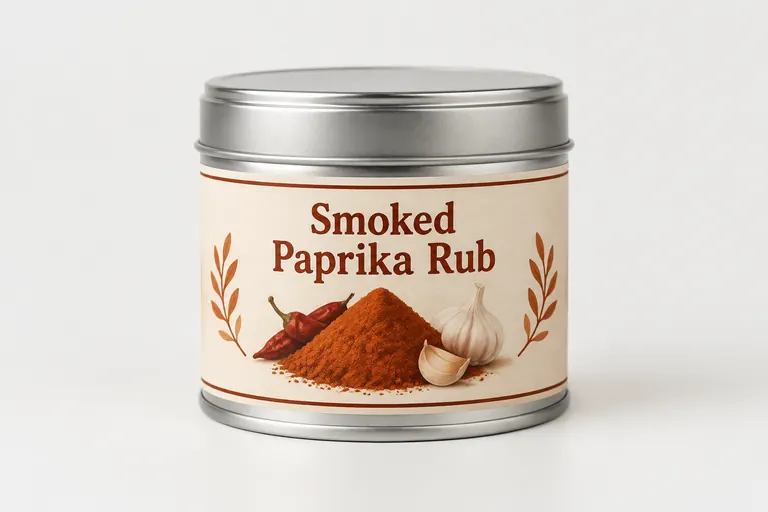
Can I make a spice rub or blend at home in Indiana?
Indiana's own pages name a spice rub or blend, or foods like it, among what Indiana says a home kitchen may make. ShelfStep found these lines by the words they use; whether they cover your product is for the Indiana Department of Health to say. Those lines, as the state writes them:
- Indiana's Home-Based Vendor rules: what may be made at homeIDOH, Indiana Home-Based Vendor Handbook says:“All non-TCS baked goods/snack items. Examples include jams, jellies, spreads, egg noodles, candies, roasted coffee grounds, trail mixes, value added foods such as maple syrup and honey, spice blends, and dried teas.”IDOH, Indiana Home-Based Vendor Handbook · Read Sep 25, 2026
What rules does a spice rub or blend come under beyond Indiana's?
Outside a home kitchen, ShelfStep's plan reads a spice rub or blend as a baked good, snack or dry mix. The plan's own line for it, a default and not a law:
What the rules behind it say, in their own words, with the page and the day ShelfStep read each. ShelfStep does not decide which of them apply to your product.
- Acidified foods: the definition and its exclusions21 CFR 114.3(b) says:“(b) Acidified foods means low-acid foods to which acid(s) or acid food(s) are added; these foods include, but are not limited to, beans, cucumbers, cabbage, artichokes, cauliflower, puddings, peppers, tropical fruits, and fish, singly or in any combination. They have a water activity (aw) greater than 0.85 and have a finished equilibrium pH of 4.6 or below. ... Carbonated beverages, jams, jellies, preserves, acid foods (including such foods as standardized and nonstandardized food dressings and condiment sauces) that contain small amounts of low-acid food(s) and have a resultant finished equilibrium pH that does not significantly differ from that of the predominant acid or acid food, and foods that are stored, distributed, and retailed under refrigeration are excluded from the coverage of this part.”21 CFR 114.3(b) · Read Oct 8, 2026
- FDA's definition of a food facility21 CFR 1.227 says:“Facility means any establishment, structure, or structures under one ownership at one general physical location, or, in the case of a mobile facility, traveling to multiple locations, that manufactures/processes, packs, or holds food for consumption in the United States. ... The private residence of an individual is not a facility.”21 CFR 1.227 · Read Oct 8, 2026
Where may food made at home be sold in Indiana?
- Indiana, home-based vendors: a yearly sales ceilingIDOH, Homestead and Small Farm Food Processor Guidance says:“No annual gross income restrictions”IDOH, Homestead and Small Farm Food Processor Guidance · Read Sep 25, 2026
- Indiana's Home-Based Vendor rules: where it may be soldIDOH, Indiana Home-Based Vendor Handbook says:“HBVs must only sell their product directly to the end consumer.”IDOH, Indiana Home-Based Vendor Handbook · Read Sep 25, 2026
- Indiana's Home-Based Vendor rules: where it may be soldIndiana Code, 2026 edition (IC 16-42-5.3 and 16-42-5.4) says:“(4) not resold; (5) sold in person, by telephone, or through the Internet; and (6) delivered to the end consumer in person, by mail, or by a third party carrier.”Indiana Code, 2026 edition (IC 16-42-5.3 and 16-42-5.4) · Read Sep 25, 2026
- Indiana's Home-Based Vendor rules: where it may be soldIndiana Code, 2026 edition (IC 16-42-5.3 and 16-42-5.4) says:“Sec. 6. (a) A home based vendor may not ship or deliver a food product to an end consumer who is located outside Indiana. (b) A home based vendor shall do the following: (1) Ship or deliver a food product in a sealed package that allows an end consumer to determine whether the product has been tampered with. (2) Maintain a record of the shipping or delivery address of each end consumer the vendor sells a food product to for at least one (1) year after the date of the sale.”Indiana Code, 2026 edition (IC 16-42-5.3 and 16-42-5.4) · Read Sep 25, 2026
- Indiana's Home-Based Vendor rules: where it may be soldIndiana Code, 2026 edition (IC 16-42-5.3 and 16-42-5.4) says:“Sec. 6. (a) The homestead vendor or the owner of a small farm may sell the items described in subsection (b) at: (1) property (as defined in section 3.5 of this chapter); or (2) a farmers market; directly to an end consumer.”Indiana Code, 2026 edition (IC 16-42-5.3 and 16-42-5.4) · Read Sep 25, 2026
- Indiana, homestead vendors: a yearly sales ceilingIndiana Code, 2026 edition (IC 16-42-5.3 and 16-42-5.4) says:“Sec. 1. As used in this chapter, "homestead vendor" means a person that prepares and sells food products or meat products from: (1) property or at a farmers market; and (2) which the person does not receive more than one million five hundred thousand dollars ($1,500,000) in gross sales from food products or meat products in a single year.”Indiana Code, 2026 edition (IC 16-42-5.3 and 16-42-5.4) · Read Sep 25, 2026
What does Indiana say a home-made label must carry?
- Indiana's Home-Based Vendor rules: the home-made labelIndiana Code, 2026 edition (IC 16-42-5.3 and 16-42-5.4) says:“(6) The following statement in at least 10 point type: "This product is home produced and processed and the production area has not been inspected by the Indiana Department of Health. NOT FOR RESALE.".”Indiana Code, 2026 edition (IC 16-42-5.3 and 16-42-5.4) · Read Sep 25, 2026
- Indiana's Home-Based Vendor rules: the home-made labelIndiana Code, 2026 edition (IC 16-42-5.3 and 16-42-5.4) says:“Sec. 5. (a) A home based vendor shall include a label for packaged food or a sign for unpackaged food that contains the following information: (1) The name and address of the producer of the food product. (2) The common or usual name of the food product. (3) The ingredients of the food product, in descending order by predominance by weight. (4) The net weight or volume of the food product by standard measure or numerical count. (5) The date on which the food product was processed.”Indiana Code, 2026 edition (IC 16-42-5.3 and 16-42-5.4) · Read Sep 25, 2026
- Indiana's Home-Based Vendor rules: the home-made labelIndiana Code, 2026 edition (IC 16-42-5.3 and 16-42-5.4) says:“(6) The following statement in at least 10 point type: "This product was produced by a homestead vendor or the owner of a small farm that is exempt from government licensing and inspection.".”Indiana Code, 2026 edition (IC 16-42-5.3 and 16-42-5.4) · Read Sep 25, 2026
What does the rules check say about a spice rub or blend made at home in Indiana?
The same deterministic check /check runs, given a spice rub or blend, a home kitchen and Indiana: the rules it raises, each with the sentences it rests on. ShelfStep does not decide which apply.
- Indiana’s wholesale food establishment registration410 IAC 7-21-51(b) says:“A new wholesale food establishment shall not be established in Indiana until the place of business has been registered… The department shall be notified of intent to operate at least thirty (30) days prior to beginning operations.”410 IAC 7-21-51 · Read Sep 21, 2026
- What Indiana’s wholesale food establishment registration includesThe Indiana Department of Health's page, Starting a wholesale food business in Indiana says:“This does not include a residential kitchen, bed and breakfast or meat, poultry and dairy processing plants.”IDOH, Starting a wholesale food business in Indiana · Read Sep 20, 2026
- When Indiana’s wholesale food establishment registration is submittedThe Indiana Department of Health's page, Starting a wholesale food business in Indiana says:“This registration must be submitted at least 30 days before the start of operations in accordance with 410 IAC 7-21 Sec. 51 (b). If your facility requires additional product testing or food safety controls… these materials must also be submitted at least 30 days before beginning operations. These materials can include: Product testing (e.g., acidity, water activity, and shelf life), Hazard Analysis and HACCP plan, Food Safety Plan and Preventive Controls”IDOH, Starting a wholesale food business in Indiana · Read Sep 21, 2026
ShelfStep has no stored sentence from this source yet. Read it at the link. Indiana DOR Sales Tax Information Bulletin #29
How do I get a spice rub or blend into a store in Indiana?
- Indiana's Home-Based Vendor rules: what applies beyond the home-kitchen rulesIDOH, Homestead and Small Farm Food Processor Guidance says:“If a homestead vendor is found selling beyond the end consumer, 21 CFR 117 applies. Under IC 16-42-1-6 a manufacturer, processor, re-packager, or wholesale distributor of food must register as a wholesale establishment with the Indiana Department of Health and comply with 21 CFR 117.”IDOH, Homestead and Small Farm Food Processor Guidance · Read Sep 25, 2026
- Indiana's Home-Based Vendor rules: what applies beyond the home-kitchen rulesIDOH, Indiana Home-Based Vendor Handbook says:“Foods that are not covered within the scope of the HBV Rule shall be produced by a permitted operator within a Food Establishment inspected by a local health department or the Indiana Department of Health.”IDOH, Indiana Home-Based Vendor Handbook · Read Sep 25, 2026
From there, ShelfStep's standard plan for a baked good, snack or dry mix has 18 steps. The first 6 help you find out where and how a spice rub or blend can be made at all, so they come first:
- 1.
Write the recipe down with exact amounts
Cost, price, nutrition and the label are all worked out from this. Write it in the units you actually use; ShelfStep converts for the label. What matters is that someone else could make the same batch from what is written.
- 2.
Decide how it is kept: on a shelf, in the fridge or frozen
The planned storage helps the reviewer assess the process, shelf life and packaging.
In the plan: It decides which rules you follow.
- 3.
Find out where you are allowed to make it for sale
This finds out whether the state’s rules allow making this in a home kitchen or point to a commercial one — and that changes the cost and the timeline of everything after it. It is much cheaper to find out now than after buying packaging.
In the plan: Your state's home-kitchen rules, in its own words. Whether they cover your product is for your state's agency to say.
- 4.
Have the pH and water activity of a finished batch measured
These measurements give your reviewer information about the batch; they do not establish safety or storage conditions on their own.
In the plan: The two numbers the acidified-food rules name. Measured on the finished product, once it has settled.
- 5.
Look into FDA registration
Registration is how FDA knows your facility exists; the plan is what an inspector or a buyer’s audit asks to see. Both are far easier to do now than during either.
- 6.
Choose the container and what seals it
The container decides the label size, how many fit a case, what shipping costs, and whether the process authority’s answer still holds. Changing it later re-opens all four.
In the plan: How it will be packed, what will seal it and what one will cost. Not sure yet is an answer.
Every step, with its reason and what it typically costs, is on the a spice rub or blend page:
Where do I go from here?
Check the rules for yours, then keep it
The rules check runs the same deterministic engine ShelfStep uses inside the app, on your answers, and quotes the sentences each rule rests on, with their links and the day ShelfStep read them. It does not decide which apply. It is free, needs no account and uses no AI. A ShelfStep workspace then keeps your plan, your records and the dates, free for one product.