How to sell a spice rub or blend to stores
Spice rubs and blends: the path from a recipe to a store shelf, as ShelfStep's own plan lays it out, with the rules it names quoted in their own words, and the typical cost of each step.
Run the free rules check for it: no account, no AI.
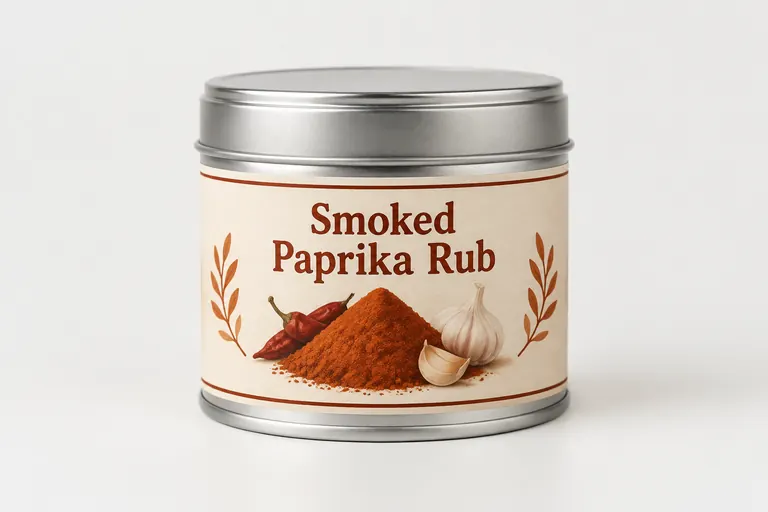
Which rules does ShelfStep's plan name for a spice rub or blend?
ShelfStep's plan reads a product like a spice rub or blend as a baked good, snack or dry mix, and says so as "likely": the name tells it what a product usually is, not what yours is. The plan's own line for it, a default and not a law:
What the rules behind it say, in their own words, with the page and the day ShelfStep read each. ShelfStep does not decide which of them apply to your product.
- Acidified foods: the definition and its exclusions21 CFR 114.3(b) says:“(b) Acidified foods means low-acid foods to which acid(s) or acid food(s) are added; these foods include, but are not limited to, beans, cucumbers, cabbage, artichokes, cauliflower, puddings, peppers, tropical fruits, and fish, singly or in any combination. They have a water activity (aw) greater than 0.85 and have a finished equilibrium pH of 4.6 or below. ... Carbonated beverages, jams, jellies, preserves, acid foods (including such foods as standardized and nonstandardized food dressings and condiment sauces) that contain small amounts of low-acid food(s) and have a resultant finished equilibrium pH that does not significantly differ from that of the predominant acid or acid food, and foods that are stored, distributed, and retailed under refrigeration are excluded from the coverage of this part.”21 CFR 114.3(b) · Read Oct 8, 2026
- FDA's definition of a food facility21 CFR 1.227 says:“Facility means any establishment, structure, or structures under one ownership at one general physical location, or, in the case of a mobile facility, traveling to multiple locations, that manufactures/processes, packs, or holds food for consumption in the United States. ... The private residence of an individual is not a facility.”21 CFR 1.227 · Read Oct 8, 2026
What does it take to sell a spice rub or blend to a store?
These are the steps of ShelfStep's standard plan for a baked good, snack or dry mix, in the order it gives them. A plan in the app is then tailored to the product you describe; this is what it starts from, with each step's reason as the app gives it.
- 1.
Write the recipe down with exact amounts
Cost, price, nutrition and the label are all worked out from this. Write it in the units you actually use; ShelfStep converts for the label. What matters is that someone else could make the same batch from what is written.
- 2.
Decide how it is kept: on a shelf, in the fridge or frozen
The planned storage helps the reviewer assess the process, shelf life and packaging.
In the plan: It decides which rules you follow.
- 3.
Find out where you are allowed to make it for sale
This finds out whether the state’s rules allow making this in a home kitchen or point to a commercial one — and that changes the cost and the timeline of everything after it. It is much cheaper to find out now than after buying packaging.
In the plan: Your state's home-kitchen rules, in its own words. Whether they cover your product is for your state's agency to say.
- 4.
Have the pH and water activity of a finished batch measured
These measurements give your reviewer information about the batch; they do not establish safety or storage conditions on their own.
In the plan: The two numbers the acidified-food rules name. Measured on the finished product, once it has settled.
- 5.
Look into FDA registration
Registration is how FDA knows your facility exists; the plan is what an inspector or a buyer’s audit asks to see. Both are far easier to do now than during either.
- 6.
Choose the container and what seals it
The container decides the label size, how many fit a case, what shipping costs, and whether the process authority’s answer still holds. Changing it later re-opens all four.
In the plan: How it will be packed, what will seal it and what one will cost. Not sure yet is an answer.
- 7.
Shortlist three co-packers or commercial kitchens
Three quotes, not one. Minimum runs vary enormously between kitchens, and the first one that says yes is rarely the one whose minimum matches the size of your first order.
In the plan: Do this even if you make it yourself today. Minimum run, lead time and rough price are what tell you whether you can grow.
- 8.
Work out what one batch, and one unit, costs to make
Cost per unit is the number every price is built on. Guessing it is how makers end up selling at a loss at wholesale and only finding out a year in.
- 9.
Set up lot codes and a recall plan
A lot code is how you would find every jar from one bad run. Buyers ask whether you can, and “yes, and here is the drill we ran” is a very different answer from “probably”.
In the plan: The code goes on your first real batch. Decide it before that batch is made.
- 10.
Make a first full-size batch
The first full-size run is where the recipe meets reality — yield, timing, equipment, what actually fits in the pot. Better to find the gap on a batch you planned than on one you have already sold.
In the plan: One full-size run with its lot code and best-by date. It is the first batch you could sell.
- 11.
Find out how long it keeps
Every best-by date you print is built from this one number. A guess here is a guess on every unit you sell, so it is worth having someone qualified stand behind it.
- 12.
Get barcodes
Grocers scan; no barcode, no shelf. Codes come from GS1 and are tied to your company, so borrowed or resold codes cause problems at the retailer rather than at your desk.
In the plan: A store scans a barcode. Each size and flavour needs its own.
- 13.
Draft the label with everything it has to say
The label is the most-inspected surface of your product, and reprints are expensive. Getting the required elements right before the print run costs far less than a sticker over a mistake.
- 14.
Set the wholesale and shelf price from the cost
Retail price is not your cost doubled. Working it forward — cost, then wholesale, then shelf price — tells you whether this product survives a grocer’s margin before you pitch one.
In the plan: From the batch cost, not a guess.
- 15.
Sell it at a market before you scale
A market day is the cheapest honest test there is: do strangers buy it, at your price, without you standing there explaining it? It also produces the sales numbers a buyer will ask you for.
- 16.
Get product liability insurance
Most retailers want a certificate naming them before they will write a first purchase order. It is also what stands between one bad batch and your own money.
In the plan: Ask the venue or the buyer what cover they require. Record the policy once it is bound.
- 17.
Make the one-page sheet a buyer reads
A buyer decides in under a minute, from one page: what it is, what it costs them, what it sells for, case pack, lead time. Without that page the conversation stalls on questions you could have answered up front.
In the plan: Needs the finished label, the case pack and the wholesale price.
- 18.
Name your first three stores
Naming three real stores turns “get into retail” into calls you can make this week. Small local grocers decide faster, and they teach you what the bigger chains will ask for later.
What does it typically cost to bring a spice rub or blend to a first store?
Each figure is a price a lab, an agency or a supplier publishes, with its source and the month it was read. They are typical figures for the ordinary service, not a quote. The first market and the first independent store are a dozen items of this size; a regional chain comes later, with costs of its own.
To a first market
- Lab pH and water activitytypically $20 to $75 per sample. This is the price of one sample, and your process authority decides how many it wants: Oklahoma State asks for 6, preferably from separate batches. One test at a lab in your own state is the low end, pH and water activity together the high end, and some labs charge out-of-state makers double. Sources: Kansas State University, Cornell Food Venture Center, University of Georgia testing lab, Purdue, through the Indiana Department of Health, Oklahoma State University; checked Sep 2026
- FDA food facility registrationfree. FDA charges nothing to register a food facility, and you do not need to pay a registrar to do it for you. Source: FDA; checked Sep 2026
- Commercial kitchen timetypically $15 to $45 per hour. The national range from a 2023 survey of shared kitchens, where most charge $20 to $29 an hour. Peak hours and big cities cost more, and many kitchens add a joining fee or a deposit. Source: The Food Corridor; checked Sep 2026
- Nutrition Facts from a databasetypically $29 to $360 per product. Working it out yourself in label software is the low end. Paying an analyst who also writes the ingredient list and allergen statement is the high end. Sources: ReciPal, FoodLab; checked Sep 2026
- Nutrition Facts from a labtypically $1,075 to $1,724 per sample. A lab measures the product itself. The fiber method and whether the finished panel is included move the price. Sources: RL Food Testing Laboratory, Medallion Labs; checked Sep 2026
- Label designtypically $299 to $1,199 one time. One design marketplace’s fixed prices for a label contest, from its first tier to its top one, before sales tax. A designer you hire directly sets their own price. Source: 99designs; checked Sep 2026
- First label print runtypically $219 to $366 per 1,000 labels. One printer’s price for 1,000 roll labels, from 3 by 2 inches to 5 by 3 inches, shipping included. Half as many costs about two thirds as much, so a small first run saves less than it seems. Source: Sticker Mule; checked Sep 2026
- A market boothtypically $30 to $84 per market day. A Saturday stall in a mid-sized city is the low end, a big-city market in peak season the high end. Most markets also charge a one-time fee to apply. Sources: YLNI Farmers Market, Fort Wayne, Portland Farmers Market; checked Sep 2026
- Product liability insurancetypically $299 to $563 per year. The low end is one program’s starting price for a small food business. The high end is the median one broker’s food and beverage customers pay, restaurants included. Your sales, where you sell and the limits a store asks for move it, and only an insurer or an agent can quote your price. Sources: FLIP, Insureon; checked Sep 2026
To a first independent store
- Co-packer’s first runAsk for a quote. A co-packer quotes each run. What they publish is the smallest run they take: 50 to 150 gallons at small sauce co-packers, far more at large ones. Ask each for their minimum and what it costs with your bottles and labels. Sources: Parish Foods, Absolutely World Class; checked Sep 2026
- Shelf-life studyAsk for a quote. A lab prices a shelf-life study by the product. One university lab lists microbial, sensory and physical and chemical analysis under it, says the price depends on the product, and invoices after the work. Ask for a quote before you send samples. Source: Kansas State University; checked Sep 2026
- One GS1 US barcodetypically $30 per product. One barcode for one product, paid once with no renewal fee. Below about eight products, single barcodes cost less than a prefix, which also renews every year. GS1 US does not offer it for products sold by weight or for mixed cases. Source: GS1 US; checked Sep 2026
- GS1 company prefixtypically $250 to $750 to start. A prefix for 10 barcodes is $250 to start and $50 every year after. For 100 barcodes it is $750 and $150 a year. It pays once you have several products or sizes. Source: GS1 US; checked Sep 2026
- Slotting, free fill or an audit at a first independent storeOne independent grocer’s guide names none. Its guide for new vendors asks for a W-9, a certificate of insurance for $1,000,000 and your barcodes, and names no slotting fee, no free fill and no audit. That is one store. What a buyer requires differs, so ask yours. Source: Market of Choice vendor guide; checked Sep 2026
Can I make a spice rub or blend at home?
It depends on the state, and the answer changes the cost and the timeline of every step after it. Of the 51 states whose cottage food rules ShelfStep has written up line by line, 23 name a spice rub or blend or foods like it. Each state's own words, and where it says them:
What should I read next about a spice rub or blend?
Check the rules for yours, then keep it
The rules check runs the same deterministic engine ShelfStep uses inside the app, on your answers, and quotes the sentences each rule rests on, with their links and the day ShelfStep read them. It does not decide which apply. It is free, needs no account and uses no AI. A ShelfStep workspace then keeps your plan, your records and the dates, free for one product.