Selling olive tapenade in Ohio
What Ohio's own pages say about making olive tapenade at home, each line linked, and the path to a store when you want one to stock it.
Run the free rules check for it: no account, no AI.
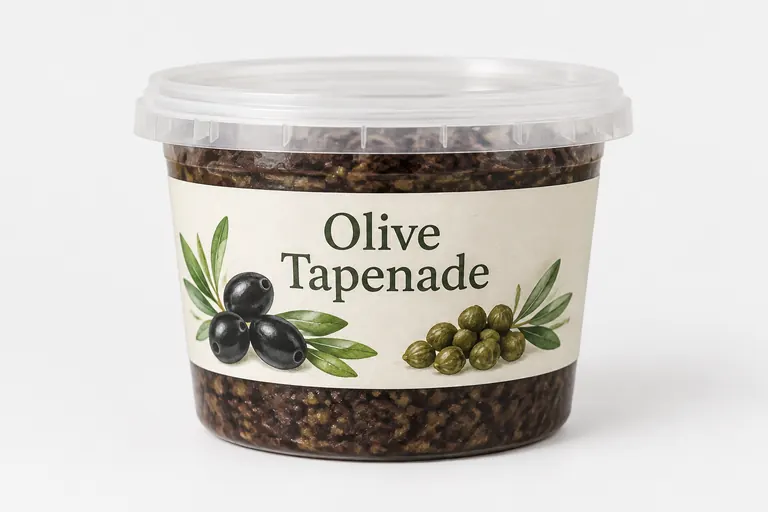
Can I make olive tapenade at home in Ohio?
Ohio's own pages, as ShelfStep read them on September 25, 2026, do not name olive tapenade or foods like it, so this page cannot tell you whether a home kitchen in Ohio may make it. Ask the Ohio Department of Agriculture before you make it at home to sell. What the state allows and leaves out in general is on the Ohio page.
What rules does olive tapenade come under beyond Ohio's?
Outside a home kitchen, ShelfStep's plan reads olive tapenade as a refrigerated or frozen food. The plan's own line for it, a default and not a law:
What the rules behind it say, in their own words, with the page and the day ShelfStep read each. ShelfStep does not decide which of them apply to your product.
- Acidified foods kept under refrigeration21 CFR 114.3(b) says:“and foods that are stored, distributed, and retailed under refrigeration are excluded from the coverage of this part.”21 CFR 114.3(b) · Read Oct 8, 2026
- FDA's definition of a food facility21 CFR 1.227 says:“Facility means any establishment, structure, or structures under one ownership at one general physical location, or, in the case of a mobile facility, traveling to multiple locations, that manufactures/processes, packs, or holds food for consumption in the United States. ... The private residence of an individual is not a facility.”21 CFR 1.227 · Read Oct 8, 2026
Where may food made at home be sold in Ohio?
- Ohio's Cottage Food Production Operation rules: where it may be soldOhio Administrative Code Chapter 901:3-20 says:“(F) Sell cottage food products outside the state of Ohio.”Ohio Administrative Code Chapter 901:3-20 · Read Sep 25, 2026
- Ohio's Cottage Food Production Operation rules: where it may be soldOhio Department of Agriculture, Cottage Food says:“Cottage Food Products may only be sold in Ohio. Cottage Food Products that are properly identified and labeled may be sold directly to the consumer from the home where the products are produced. They may also be sold through grocery stores, registered farm markets, farmers markets, and sold and/or used in preparing food in a restaurant.”Ohio Department of Agriculture, Cottage Food · Read Sep 25, 2026
What does Ohio say a home-made label must carry?
- Ohio's Cottage Food Production Operation rules: the home-made labelOhio Department of Agriculture, Cottage Food says:“An ingredient that is or contains protein from a "major food allergen" must have the presence of the allergen declared by common name in the ingredient statement or by placing the word "Contains" followed by the name of each major food allergen present in the food.”Ohio Department of Agriculture, Cottage Food · Read Sep 25, 2026
- Ohio's Cottage Food Production Operation rules: the home-made labelOhio Revised Code 3715.023 says:“(5) In the case of a cottage food production operation, the following statement in ten-point type: "This product is home produced."”Ohio Revised Code 3715.023 · Read Sep 25, 2026
- Ohio's Cottage Food Production Operation rules: the home-made labelOhio Revised Code 3715.023 says:“(1) The name and address of the business of the cottage food production operation, processor, or beekeeper; (2) The name of the food product; (3) The ingredients of the food product, in descending order of predominance by weight; (4) The net weight and volume of the food product;”Ohio Revised Code 3715.023 · Read Sep 25, 2026
How do I get olive tapenade into a store in Ohio?
- Ohio's Cottage Food Production Operation rules: what applies beyond the home-kitchen rulesOhio Department of Agriculture, Starting a Food Business says:“All other food products, with some exceptions, will need a food processing license from the Division of Food Safety. Wholesaling under a food processing facility license allows you to sell your products anywhere and to anyone; this includes grocery stores, restaurants and the internet.”Ohio Department of Agriculture, Starting a Food Business · Read Sep 25, 2026
From there, ShelfStep's standard plan for a refrigerated or frozen food has 20 steps. The first 6 help you find out where and how olive tapenade can be made at all, so they come first:
- 1.
Write the recipe down with exact amounts
Cost, price, nutrition and the label are all worked out from this. Write it in the units you actually use; ShelfStep converts for the label. What matters is that someone else could make the same batch from what is written.
- 2.
Decide how it is kept: on a shelf, in the fridge or frozen
The planned storage helps the reviewer assess the process, shelf life and packaging.
In the plan: It decides which rules you follow.
- 3.
Work out how it stays cold from your kitchen to the shop
If your product needs refrigeration or freezing, plan how to keep it cold at every hand-off. Who keeps it cold at each hand-off, and how you would know if they did not, is what a buyer asks first.
- 4.
Find out where you are allowed to make it for sale
This finds out whether the state’s rules allow making this in a home kitchen or point to a commercial one — and that changes the cost and the timeline of everything after it. It is much cheaper to find out now than after buying packaging.
In the plan: Your state's home-kitchen rules, in its own words. Whether they cover your product is for your state's agency to say.
- 5.
Have the pH and water activity of a finished batch measured
These measurements give your reviewer information about the batch; they do not establish safety or storage conditions on their own.
In the plan: The two numbers the acidified-food rules name. Measured on the finished product, once it has settled.
Every step, with its reason and what it typically costs, is on the olive tapenade page:
Where do I go from here?
Check the rules for yours, then keep it
The rules check runs the same deterministic engine ShelfStep uses inside the app, on your answers, and quotes the sentences each rule rests on, with their links and the day ShelfStep read them. It does not decide which apply. It is free, needs no account and uses no AI. A ShelfStep workspace then keeps your plan, your records and the dates, free for one product.