Selling olive tapenade in Idaho
What Idaho's own pages say about making olive tapenade at home, each line linked, and the path to a store when you want one to stock it.
Run the free rules check for it: no account, no AI.
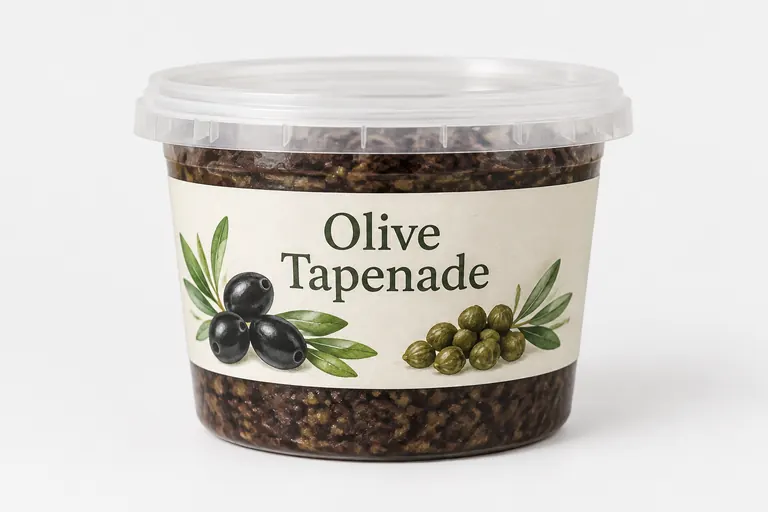
Can I make olive tapenade at home in Idaho?
Idaho's own pages name olive tapenade, or foods like it, among what Idaho says a home kitchen may not make. ShelfStep found these lines by the words they use; whether they cover your product is for the Idaho Department of Health and Welfare to say. Those lines, as the state writes them:
- Idaho's Idaho Direct-to-Consumer Commerce Act rules: what may be made at homeIdaho Code Title 37, Chapter 2 (Idaho Direct-to-Consumer Commerce Act) says:“(10) "Shelf-stable food" means homemade food or drinks that do not require time or temperature control. Shelf-stable food includes but is not limited to: (a) Hermetically sealed butters, jams, jellies, marmalades, preserves, and syrups; (b) Fermented food products; (c) Tallow; (d) Lard; (e) Fruit leathers, pies, and turnovers; (f) Chocolates, candies, and confectioneries that do not need to be refrigerated; (g) Nonalcoholic drinks that do not need to be refrigerated; (h) Milk and dairy products that do not need to be refrigerated; (i) Nut mixes; (j) Granola; (k) Dry soup mixes, excluding meat-based soup mixes; (l) Roasted coffee beans; (m) Popcorn; (n) Honey; (o) Dried, dehydrated, and freeze-dried foods, including jerky products; and (p) Baked goods that do not include frosting or filling made from animal products or other perishable ingredients.”Idaho Code Title 37, Chapter 2 (Idaho Direct-to-Consumer Commerce Act) · Read Oct 24, 2026
What rules does olive tapenade come under beyond Idaho's?
Outside a home kitchen, ShelfStep's plan reads olive tapenade as a refrigerated or frozen food. The plan's own line for it, a default and not a law:
What the rules behind it say, in their own words, with the page and the day ShelfStep read each. ShelfStep does not decide which of them apply to your product.
- Acidified foods kept under refrigeration21 CFR 114.3(b) says:“and foods that are stored, distributed, and retailed under refrigeration are excluded from the coverage of this part.”21 CFR 114.3(b) · Read Oct 8, 2026
- FDA's definition of a food facility21 CFR 1.227 says:“Facility means any establishment, structure, or structures under one ownership at one general physical location, or, in the case of a mobile facility, traveling to multiple locations, that manufactures/processes, packs, or holds food for consumption in the United States. ... The private residence of an individual is not a facility.”21 CFR 1.227 · Read Oct 8, 2026
Where may food made at home be sold in Idaho?
- Idaho's Idaho Direct-to-Consumer Commerce Act rules: where it may be soldIdaho Code Title 37, Chapter 2 (Idaho Direct-to-Consumer Commerce Act) says:“(2) Transactions conducted pursuant to this chapter shall: (a) Occur between a producer or designated agent and informed end consumer; (b) Occur entirely within the state of Idaho and shall not constitute or involve interstate commerce. All production, processing, packaging, sale, and delivery activities shall take place wholly within the state of Idaho; and”Idaho Code Title 37, Chapter 2 (Idaho Direct-to-Consumer Commerce Act) · Read Oct 24, 2026
- Idaho's Idaho Direct-to-Consumer Commerce Act rules: where it may be soldIdaho Code Title 37, Chapter 2 (Idaho Direct-to-Consumer Commerce Act) says:“(3) "Designated agent" means a person, cooperative market, consignment model market, or other entity designated by a producer to facilitate producer-to-consumer transactions, including marketing, transport, storage, selling, and delivery of food or nonalcoholic drink products. A designated agent shall be named in writing by the producer and shall not take ownership of any food or drink product.”Idaho Code Title 37, Chapter 2 (Idaho Direct-to-Consumer Commerce Act) · Read Oct 24, 2026
- Idaho's Idaho Direct-to-Consumer Commerce Act rules: where it may be soldIdaho Code Title 37, Chapter 2 (Idaho Direct-to-Consumer Commerce Act) says:“(5) If a retail space is in any way associated with a commercial food establishment or offers any food product available pursuant to this chapter for sale, the retail space shall: (a) Avoid intermingling by physically separating products available pursuant to this chapter from other products, including shelving in coolers, freezers, warehouses, or other storage areas; and (b) Include signs or other markings clearly indicating which area offers products available pursuant to this chapter.”Idaho Code Title 37, Chapter 2 (Idaho Direct-to-Consumer Commerce Act) · Read Oct 24, 2026
- Idaho's Idaho Direct-to-Consumer Commerce Act rules: where it may be soldIDHW, Food Safety says:“If you sell food or drinks outside of Idaho, you may need FDA approval.”IDHW, Food Safety · Read Oct 24, 2026
What does Idaho say a home-made label must carry?
- Idaho's Idaho Direct-to-Consumer Commerce Act rules: the home-made labelIdaho Code Title 37, Chapter 2 (Idaho Direct-to-Consumer Commerce Act) says:“(b) There shall be a conspicuously displayed sign, label affixed to the food product, or card given to the informed end consumer that shall: (i) State: "This product is not subject to government food safety inspection or licensing requirements. It may contain allergens.";”Idaho Code Title 37, Chapter 2 (Idaho Direct-to-Consumer Commerce Act) · Read Oct 24, 2026
- Idaho's Idaho Direct-to-Consumer Commerce Act rules: the home-made labelIdaho Code Title 37, Chapter 2 (Idaho Direct-to-Consumer Commerce Act) says:“(b) Perishable food products shall include information on handling instructions sufficient to inform the consumer of safe storage and preparation practices.”Idaho Code Title 37, Chapter 2 (Idaho Direct-to-Consumer Commerce Act) · Read Oct 24, 2026
- Idaho's Idaho Direct-to-Consumer Commerce Act rules: the home-made labelIDHW, Food Safety says:“This notification must also include the name and contact information of the producer, and a list of ingredients used in the product if it contains two or more ingredients.”IDHW, Food Safety · Read Oct 24, 2026
How do I get olive tapenade into a store in Idaho?
- Idaho's Idaho Direct-to-Consumer Commerce Act rules: what applies beyond the home-kitchen rulesIDHW, Food Safety says:“Wholesale operations are not exempted from regulation by the Idaho Direct-to-Consumer Commerce Act.”IDHW, Food Safety · Read Oct 24, 2026
From there, ShelfStep's standard plan for a refrigerated or frozen food has 20 steps. The first 6 help you find out where and how olive tapenade can be made at all, so they come first:
- 1.
Write the recipe down with exact amounts
Cost, price, nutrition and the label are all worked out from this. Write it in the units you actually use; ShelfStep converts for the label. What matters is that someone else could make the same batch from what is written.
- 2.
Decide how it is kept: on a shelf, in the fridge or frozen
The planned storage helps the reviewer assess the process, shelf life and packaging.
In the plan: It decides which rules you follow.
- 3.
Work out how it stays cold from your kitchen to the shop
If your product needs refrigeration or freezing, plan how to keep it cold at every hand-off. Who keeps it cold at each hand-off, and how you would know if they did not, is what a buyer asks first.
- 4.
Find out where you are allowed to make it for sale
This finds out whether the state’s rules allow making this in a home kitchen or point to a commercial one — and that changes the cost and the timeline of everything after it. It is much cheaper to find out now than after buying packaging.
In the plan: Your state's home-kitchen rules, in its own words. Whether they cover your product is for your state's agency to say.
- 5.
Have the pH and water activity of a finished batch measured
These measurements give your reviewer information about the batch; they do not establish safety or storage conditions on their own.
In the plan: The two numbers the acidified-food rules name. Measured on the finished product, once it has settled.
Every step, with its reason and what it typically costs, is on the olive tapenade page:
Where do I go from here?
Check the rules for yours, then keep it
The rules check runs the same deterministic engine ShelfStep uses inside the app, on your answers, and quotes the sentences each rule rests on, with their links and the day ShelfStep read them. It does not decide which apply. It is free, needs no account and uses no AI. A ShelfStep workspace then keeps your plan, your records and the dates, free for one product.