Selling cookies in New Mexico
What New Mexico's own pages say about making cookies at home, each line linked, and the path to a store when you want one to stock it.
Run the free rules check for it: no account, no AI.
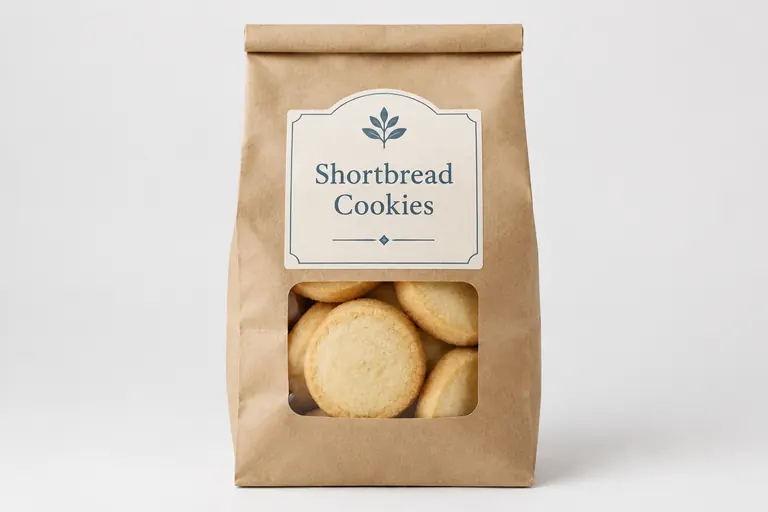
Can I make cookies at home in New Mexico?
New Mexico's own pages name cookies, or foods like them, among what New Mexico says a home kitchen may make. ShelfStep found these lines by the words they use; whether they cover your product is for the New Mexico Environment Department to say. Those lines, as the state writes them:
- New Mexico's Homemade Food Act rules: what may be made at homeNMED, Homemade Food Act FAQ says:“Examples of non-TCS food include: Non-cream filled baked goods that do not require refrigeration, such as cakes, cookies, yeast breads, pies, pastries Candy Popcorn Chocolate covered pretzels Dehydrated fruits Granola/dry mixes Roasted coffee Whole fruits and vegetables Standard high sugar fruit jams/jellies Please note that this is not an exhaustive list, nor does it dictate what you may or may not sell under the Act.”NMED, Homemade Food Act FAQ · Read Oct 24, 2026
What rules do cookies come under beyond New Mexico's?
Outside a home kitchen, ShelfStep's plan reads cookies as a baked good, snack or dry mix. The plan's own line for it, a default and not a law:
What the rules behind it say, in their own words, with the page and the day ShelfStep read each. ShelfStep does not decide which of them apply to your product.
- Acidified foods: the definition and its exclusions21 CFR 114.3(b) says:“(b) Acidified foods means low-acid foods to which acid(s) or acid food(s) are added; these foods include, but are not limited to, beans, cucumbers, cabbage, artichokes, cauliflower, puddings, peppers, tropical fruits, and fish, singly or in any combination. They have a water activity (aw) greater than 0.85 and have a finished equilibrium pH of 4.6 or below. ... Carbonated beverages, jams, jellies, preserves, acid foods (including such foods as standardized and nonstandardized food dressings and condiment sauces) that contain small amounts of low-acid food(s) and have a resultant finished equilibrium pH that does not significantly differ from that of the predominant acid or acid food, and foods that are stored, distributed, and retailed under refrigeration are excluded from the coverage of this part.”21 CFR 114.3(b) · Read Oct 8, 2026
- FDA's definition of a food facility21 CFR 1.227 says:“Facility means any establishment, structure, or structures under one ownership at one general physical location, or, in the case of a mobile facility, traveling to multiple locations, that manufactures/processes, packs, or holds food for consumption in the United States. ... The private residence of an individual is not a facility.”21 CFR 1.227 · Read Oct 8, 2026
Where may food made at home be sold in New Mexico?
- New Mexico's Homemade Food Act rules: where it may be soldNMED, Homemade Food Act FAQ says:“You may sell your homemade food items directly to consumers within the state of New Mexico at places like farmers' markets, festivals, on the internet, at roadside stands, at the seller's home for pick-up or delivery or through mail delivery. Homemade items may not be sold to a restaurant, a wholesaler or distributor, or outside the state of New Mexico.”NMED, Homemade Food Act FAQ · Read Oct 24, 2026
- New Mexico's Homemade Food Act rules: where it may be soldNMED, Homemade Food Act FAQ says:“NMED permitted food facilities may not use homemade foods as ingredients in their food items and grocery stores or similar facilities may not purchase or resell prepackaged homemade foods.”NMED, Homemade Food Act FAQ · Read Oct 24, 2026
What does New Mexico say a home-made label must carry?
- New Mexico's Homemade Food Act rules: the home-made labelNMED, Homemade Food Act FAQ says:“The following statement must be on the label: "This product is home produced and is exempt from state licensing and inspection. This product may contain allergens."”NMED, Homemade Food Act FAQ · Read Oct 24, 2026
- New Mexico's Homemade Food Act rules: the home-made labelNMED, Homemade Food Act FAQ says:“The following is required on labels/place cards: • • • • • The name, home address, telephone number and email address of the processor of the food item. The common or usual name of the food item (i.e. Chocolate Chip Cookies) The ingredients of the food item listed from most to least present in the item. All sub-ingredients must be included on the ingredients statement.”NMED, Homemade Food Act FAQ · Read Oct 24, 2026
- New Mexico's Homemade Food Act rules: the home-made labelNMED, Homemade Food Act FAQ says:“You must provide consumers the information listed in question #10 in one of the following ways: • • • • On a package label. On a label attached to a bulk container (when items are offered from a bulk container). On a place card displayed at the point of sale (when items are not packaged or offered from a bulk container). On a webpage where the items are offered for sale.”NMED, Homemade Food Act FAQ · Read Oct 24, 2026
How do I get cookies into a store in New Mexico?
- New Mexico's Homemade Food Act rules: what applies beyond the home-kitchen rulesNMED, Homemade Food Act FAQ says:“TCS foods must be produced in an NMED permitted commercial kitchen.”NMED, Homemade Food Act FAQ · Read Oct 24, 2026
- New Mexico's Homemade Food Act rules: what applies beyond the home-kitchen rulesNMED, Homemade Food Act FAQ says:“If you would like to produce food items to be sold to these types of facilities a commercial manufactured food permit from NMED is required.”NMED, Homemade Food Act FAQ · Read Oct 24, 2026
From there, ShelfStep's standard plan for a baked good, snack or dry mix has 18 steps. The first 6 help you find out where and how cookies can be made at all, so they come first:
- 1.
Write the recipe down with exact amounts
Cost, price, nutrition and the label are all worked out from this. Write it in the units you actually use; ShelfStep converts for the label. What matters is that someone else could make the same batch from what is written.
- 2.
Decide how it is kept: on a shelf, in the fridge or frozen
The planned storage helps the reviewer assess the process, shelf life and packaging.
In the plan: It decides which rules you follow.
- 3.
Find out where you are allowed to make it for sale
This finds out whether the state’s rules allow making this in a home kitchen or point to a commercial one — and that changes the cost and the timeline of everything after it. It is much cheaper to find out now than after buying packaging.
In the plan: Your state's home-kitchen rules, in its own words. Whether they cover your product is for your state's agency to say.
- 4.
Have the pH and water activity of a finished batch measured
These measurements give your reviewer information about the batch; they do not establish safety or storage conditions on their own.
In the plan: The two numbers the acidified-food rules name. Measured on the finished product, once it has settled.
- 5.
Look into FDA registration
Registration is how FDA knows your facility exists; the plan is what an inspector or a buyer’s audit asks to see. Both are far easier to do now than during either.
- 6.
Choose the container and what seals it
The container decides the label size, how many fit a case, what shipping costs, and whether the process authority’s answer still holds. Changing it later re-opens all four.
In the plan: How it will be packed, what will seal it and what one will cost. Not sure yet is an answer.
Every step, with its reason and what it typically costs, is on the cookies page:
Where do I go from here?
Check the rules for yours, then keep it
The rules check runs the same deterministic engine ShelfStep uses inside the app, on your answers, and quotes the sentences each rule rests on, with their links and the day ShelfStep read them. It does not decide which apply. It is free, needs no account and uses no AI. A ShelfStep workspace then keeps your plan, your records and the dates, free for one product.