Selling cold brew coffee in Arkansas
What Arkansas's own pages say about making cold brew coffee at home, each line linked, and the path to a store when you want one to stock it.
Run the free rules check for it: no account, no AI.
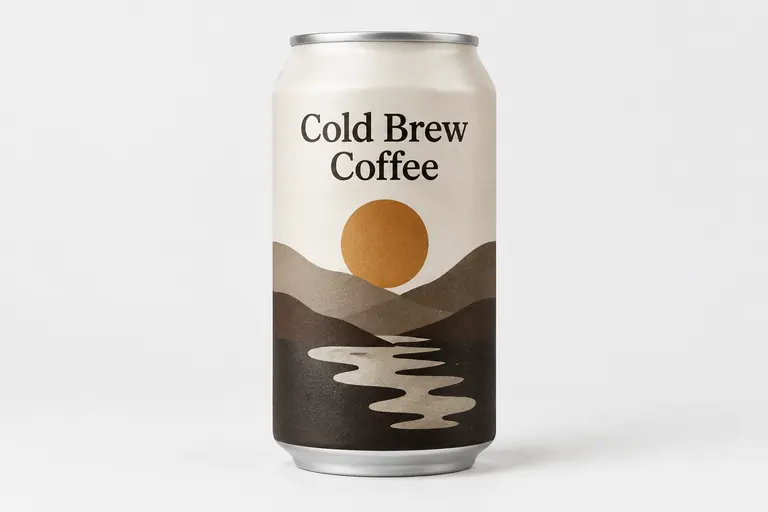
Can I make cold brew coffee at home in Arkansas?
Arkansas's own pages name cold brew coffee, or foods like it, among what Arkansas says a home kitchen may make. ShelfStep found these lines by the words they use; whether they cover your product is for the Arkansas Department of Health to say. Those lines, as the state writes them:
- Arkansas's Food Freedom Act rules: what may be made at homeADH, Arkansas Homemade Food Production Guide says:“Homemade Non-TCS Food is food or drink products that do not require refrigeration to prevent the growth of disease-causing microorganisms and are processed at the private residence of the producer.”ADH, Arkansas Homemade Food Production Guide · Read Oct 24, 2026
What rules does cold brew coffee come under beyond Arkansas's?
Outside a home kitchen, ShelfStep's plan reads cold brew coffee as a beverage. The plan's own line for it, a default and not a law:
What the rules behind it say, in their own words, with the page and the day ShelfStep read each. ShelfStep does not decide which of them apply to your product.
- Juice and the juice HACCP rule21 CFR 120.1(a) says:“(a) Any juice sold as such or used as an ingredient in beverages shall be processed in accordance with the requirements of this part.”21 CFR 120.1(a) · Read Oct 8, 2026
- Juice HACCP and retail establishments21 CFR 120.3(j) and (l) says:“(2) For purposes of this part, processing does not include: (i) Harvesting, picking, or transporting raw agricultural ingredients of juice products, without otherwise engaging in processing; and (ii) The operation of a retail establishment. ... (l) Retail establishment is an operation that provides juice directly to the consumers and does not include an establishment that sells or distributes juice to other business entities as well as directly to consumers.”21 CFR 120.3(j) and (l) · Read Oct 8, 2026
- FDA's definition of a food facility21 CFR 1.227 says:“Facility means any establishment, structure, or structures under one ownership at one general physical location, or, in the case of a mobile facility, traveling to multiple locations, that manufactures/processes, packs, or holds food for consumption in the United States. ... The private residence of an individual is not a facility.”21 CFR 1.227 · Read Oct 8, 2026
Where may food made at home be sold in Arkansas?
- Arkansas's Food Freedom Act rules: where it may be soldADH, Arkansas Homemade Food Production Guide says:“Homemade Non-TCS Foods can be sold: 1. Direct to the informed consumer either in-person, by telephone, or online by the producer of the Homemade Non-TCS Food, by an agent of the producer (i.e. employee, friend, etc.), or by a third-party vendor (i.e. a retail shop or a grocery store).”ADH, Arkansas Homemade Food Production Guide · Read Oct 24, 2026
- Arkansas's Food Freedom Act rules: where it may be soldADH, Arkansas Homemade Food Production Guide says:“Delivery of the product can be by the producer, agent of the producer, third-party vendor, or third-party carrier (mail, parcel post, etc.)”ADH, Arkansas Homemade Food Production Guide · Read Oct 24, 2026
- Arkansas's Food Freedom Act rules: where it may be soldADH, Arkansas Homemade Food Production Guide says:“Within the State of Arkansas or in another state if the seller complies with all federal laws. Homemade Non-TCS Food producers should contact the United States Food and Drug Administration as well as the state and local public health authorities prior to any sale out of state to ensure compliance with any applicable laws or regulations.”ADH, Arkansas Homemade Food Production Guide · Read Oct 24, 2026
- Arkansas's Food Freedom Act rules: where it may be soldADH, Arkansas Homemade Food Production Guide says:“NOTE: Homemade Non0TCS Foods cannot be sold to restaurants for use within the restaurant because Homemade Non-TCS Foods are not from approved sources.”ADH, Arkansas Homemade Food Production Guide · Read Oct 24, 2026
What does Arkansas say a home-made label must carry?
- Arkansas's Food Freedom Act rules: the home-made labelADH, Arkansas Homemade Food Production Guide says:“The statement: "This product was produced in a private residence that is exempt from state licensing and inspection. This product may contain allergens."”ADH, Arkansas Homemade Food Production Guide · Read Oct 24, 2026
- Arkansas's Food Freedom Act rules: the home-made labelADH, Arkansas Homemade Food Production Guide says:“1. The date that the Homemade Non-TCS Food was manufactured, produced, or processed. 2. The name, address, and telephone number of the producer. Producers who do not wish to disclose this information for safety reasons may request an identification number provided by the Arkansas Department of Agriculture to be used instead of this information. (To obtain an ID number, please fill out this form from the Arkansas Department of Agriculture). 3. The common or usual name of the food. 4. The ingredients of the food in descending order of predominance.”ADH, Arkansas Homemade Food Production Guide · Read Oct 24, 2026
- Arkansas's Food Freedom Act rules: the home-made labelADH, Arkansas Homemade Food Production Guide says:“For products offered for sale online, the website must include the above labeling information and the package itself must be labeled.”ADH, Arkansas Homemade Food Production Guide · Read Oct 24, 2026
How do I get cold brew coffee into a store in Arkansas?
- Arkansas's Food Freedom Act rules: what applies beyond the home-kitchen rulesADH, Arkansas Homemade Food Production Guide says:“Depending on the product sold, a vendor may be required to obtain a permit from the ADH as a Retail Food Establishment or a Food Processing Plant.”ADH, Arkansas Homemade Food Production Guide · Read Oct 24, 2026
- Arkansas's Food Freedom Act rules: what applies beyond the home-kitchen rulesADH, Arkansas Homemade Food Production Guide says:“Any TCS food, even if the food is commercially pre-packaged, can only be sold or served from an ADH permitted and inspected facility.”ADH, Arkansas Homemade Food Production Guide · Read Oct 24, 2026
From there, ShelfStep's standard plan for a beverage has 19 steps. The first 6 help you find out where and how cold brew coffee can be made at all, so they come first:
- 1.
Write the recipe down with exact amounts
Cost, price, nutrition and the label are all worked out from this. Write it in the units you actually use; ShelfStep converts for the label. What matters is that someone else could make the same batch from what is written.
- 2.
Decide how it is kept: on a shelf, in the fridge or frozen
The planned storage helps the reviewer assess the process, shelf life and packaging.
In the plan: It decides which rules you follow.
- 3.
Find out where you are allowed to make it for sale
This finds out whether the state’s rules allow making this in a home kitchen or point to a commercial one — and that changes the cost and the timeline of everything after it. It is much cheaper to find out now than after buying packaging.
In the plan: Your state's home-kitchen rules, in its own words. Whether they cover your product is for your state's agency to say.
- 4.
Have the pH and water activity of a finished batch measured
These measurements give your reviewer information about the batch; they do not establish safety or storage conditions on their own.
In the plan: The two numbers the acidified-food rules name. Measured on the finished product, once it has settled.
- 6.
Look into FDA registration
Registration is how FDA knows your facility exists; the plan is what an inspector or a buyer’s audit asks to see. Both are far easier to do now than during either.
In the plan: Look into registration with FDA. Any filing your Process Authority letter names belongs here too.
Every step, with its reason and what it typically costs, is on the cold brew coffee page:
Where do I go from here?
Check the rules for yours, then keep it
The rules check runs the same deterministic engine ShelfStep uses inside the app, on your answers, and quotes the sentences each rule rests on, with their links and the day ShelfStep read them. It does not decide which apply. It is free, needs no account and uses no AI. A ShelfStep workspace then keeps your plan, your records and the dates, free for one product.